
Medspa SEO is a connected system: accessible pages, useful treatment information, accurate local context, and a regular review of what patients can find. This guide combines the practical workstreams with the decisions an owner needs to make before expanding the website.
For ongoing delivery, explore our medspa SEO management, the Services process, or the Prova Haus medspa SEO homepage.
1. Understand treatment demand and patient intent
Begin with the treatments the practice actually wants to grow. Appointment capacity, clinical suitability, location, and the quality of the consultation experience matter more than a large keyword list. A search can be popular without being a good fit for the practice or the page you plan to create.
Map those priorities to real questions. Patients may search by a device name, a treatment category, a concern, a location, or a combination of these. The language patients use can differ from the language on a manufacturer’s brochure. Research should connect these expressions without making unsupported medical or outcome claims.
Then decide which page should satisfy each meaningful intent. A treatment overview can explain the procedure, while a location page can explain the relevant practice setting. A supporting article can answer a detailed question. These pages should complement one another rather than repeat the same copy with small keyword changes.
The practical output is a short, prioritized page map, not hundreds of speculative articles. Each proposed page needs a purpose, a reader, a relationship to existing content, and a useful next action. That keeps the website easier to navigate and gives ongoing SEO work a clear business context.
Different searches need different answers
- Transactional / commercial intent: Searches like "botox near me," "lip filler [city]," or "medspa booking [neighborhood]." The patient is ready to act. These queries deserve treatment or service pages with a clear call to action, pricing context, and booking mechanics.
- Comparative / commercial-investigative intent: Searches like "sculptra vs. Radiesse," "best medspa for skin tightening," or "how much does CoolSculpting cost." The patient is evaluating options. These deserve detailed comparison pages or treatment guides, not thin landing pages.
- Informational intent: Searches like "how does RF microneedling work" or "what is the downtime for a chemical peel." The patient is learning. Blog posts and FAQ content serve this intent. The conversion path is indirect, build trust now, earn the consultation later.
- Navigational intent: Searches that include the clinic name. These are largely won by having a complete, accurate presence: correct NAP (name, address, phone) across Google Business Profile, your website, and key directories. Technical issues that confuse these searches, duplicate pages, incorrect schema, are expensive to ignore.
2. Audit the starting point and technical foundation
An audit should establish what search engines can access and what patients experience after arriving. Check important pages, navigation, booking links, mobile layouts, loading behavior, and the clarity of treatment information. A visually polished website can still have indexing problems, and a technically accessible page can still be unhelpful to a patient.
Review Google Search Console before choosing priorities. Look for the queries and pages already earning impressions, the relationship between impressions and clicks, and whether key treatment pages are indexed. Separate a measurement gap from an actual visibility problem. Missing booking tracking does not prove the website generated no inquiries.
Check the relationship between the website and the local business presence. The practice name, contact details, service information, and location details should be accurate wherever they appear. Flag old addresses, duplicate pages, misleading service descriptions, or booking destinations that no longer match how the team works.
The audit should end with an ordered plan. Distinguish urgent access problems from content improvements, design changes, and longer-term opportunities. A useful recommendation explains the reason, affected page, and next decision. We use the free audit as an entry point, then agree the ongoing scope before paid work begins.
Technical SEO starts with access to the correct public content. Important pages need successful responses, readable HTML, and links that crawlers can follow. A site should not serve the homepage title and canonical for every route. Each public page needs to identify its own subject and preferred URL clearly.
Canonical URLs, redirects, and sitemap entries should agree. Pick one public URL form and use it consistently in navigation and structured data. A sitemap helps discovery, but submitting a URL does not require Google to crawl or index it. Private administrative pages and duplicate or redirected URLs should not be presented as priority indexable content.
Review mobile usability and loading behavior alongside crawlability. Large uncompressed images, unstable layouts, broken forms, and hard-to-tap controls make the website harder to use. Improving these problems supports the patient experience even when a particular change cannot be isolated as the cause of a ranking movement.
Technical work should remain proportionate to the actual problem. Fix a blocked treatment page before spending time on minor cosmetic scores. Keep a record of changes and verify that public content, canonical tags, and booking links still work afterward. A recurring check is more useful than a one-time report that nobody revisits.
Start with the clinic audit checklist and technical SEO checklist for an ordered review, not an unprioritized issue export.
3. Connect treatment pages and supporting content
A clear website structure helps patients and search engines understand the practice. Organize pages around actual treatments, meaningful service categories, real locations, and supporting patient questions. Important services should be reachable through normal links, not hidden behind a search form or an image that does not provide a navigable destination.
One treatment, one useful primary page is a practical starting principle. It is not an instruction to create a separate page for every keyword variation. A single strong page can address closely related wording when the patient’s underlying need is the same. Additional pages need genuinely different information or intent.
For practices serving more than one city, distinguish location relevance from duplicate city copy. Explain where patients can receive the treatment, which practical details differ, and how they can contact the right team. Only describe locations the practice actually serves. Do not invent an office to target a city.
Internal links should make the next useful page obvious. An educational article can point to a treatment overview, and that overview can link to related questions or consultation information. Descriptive anchor text gives context without forcing the same exact keyword into every sentence. The goal is a coherent site, not a dense web of repeated phrases.
A treatment page should explain what the service is, who can discuss suitability with the clinical team, and what the consultation involves. Patients often want to understand downtime, the treatment process, expected scheduling, and the limits of general online information. Clear answers are more helpful than a list of repeated promotional claims.
Clinical accuracy comes first. Content should reflect the services actually provided and be reviewed by appropriately qualified people when it discusses medical care. Do not copy manufacturer claims into a different context or promise a physical result for every patient. The website should support an informed consultation, not replace one.
Useful pages also make the next action easy. A patient should understand how to request a consultation, which location they are contacting, and what happens after the form or booking link. Keep required information proportionate and avoid collecting unnecessary sensitive details through a general marketing form.
Improve existing pages before assuming the answer is more content. A weak heading structure, missing location context, vague explanation, or broken booking path may be the immediate constraint. A carefully revised treatment page can serve readers better than several new articles that repeat information the website already has.
Clinical and editorial review
- Named practitioners with verifiable credentials and authored or reviewed content
- Treatment descriptions that acknowledge patient variability and individual consultation needs, never universal outcome promises
- Before-and-after imagery with proper consent documentation and claims that align with advertising regulations
- Source citations when you reference clinical protocols, ingredient efficacy, or safety profiles
- A clear update date and editorial review policy on treatment pages
4. Align local search and genuine patient feedback
Local SEO connects the website with the practice’s real-world presence. Google Business Profile information, service descriptions, accurate contact details, and useful location pages all help establish context. The work must reflect the actual practice. A mailing address, a targeted city, and a staffed patient-facing location are not automatically the same thing.
Google describes local results in terms of relevance, distance, and prominence. These are broad concepts, not a formula we can control. A practice can improve the accuracy and usefulness of its presence, but it cannot move itself physically closer to every searcher or purchase a better organic local position.
Keep business details current when hours, booking links, or offered services change. Review profile information against the website rather than treating each platform as a separate project. An outdated phone number or a confusing location choice creates friction regardless of how attractive the search result looks.
Measure local visibility with context. A map result depends on where the search is made, the wording used, and the result type. A single screenshot is evidence of that appearance, not a universal local ranking. Use consistent observation methods and separate profile interactions from confirmed appointments in your reporting.
- Relevance is how well your Business Profile and website match what a patient is searching for. Choosing the correct primary category (Medical Spa, rather than a generic Health option) and building comprehensive service lists are the primary levers.
- Distance is geographic proximity to the searcher. A clinic cannot change its address, but it can ensure Google knows exactly where it is, consistent NAP across every directory, accurate pin placement, and no conflicting location signals.
- Prominence is how well-known a business is. This combines review count and quality, backlinks to your website, mentions across the web, and your general off-site presence. Prominence is where local SEO intersects with content and authority work.
Reviews can help prospective patients evaluate the practice and contribute to local reputation. A larger count alone is not a complete SEO strategy. Relevant, authentic feedback and a consistent patient experience matter more than trying to manufacture a particular rating or imitate the review profile of a competitor.
Create a straightforward process for requesting honest feedback from eligible patients without pressure, incentives, or selective filtering designed to suppress negative experiences. Follow the platform’s policies. The front desk needs a process it can use consistently without making the request feel like a condition of good service.
Responses deserve care because medspa interactions can involve sensitive information. Do not confirm treatment details or disclose private information while answering a public review. Keep responses professional and move individual concerns to an appropriate private channel. Ask the practice’s qualified team to set the boundaries for public communication.
Treat review themes as operational insight, not just search content. Repeated comments about scheduling, explanations, waiting, or follow-up may identify something the practice can improve. SEO cannot compensate for an inconsistent patient experience indefinitely. The most useful reputation work connects accurate expectations with what patients actually encounter.
5. Build credible authority without shortcuts
Authority work should help people and search systems understand why the practice is a relevant source. Clear clinician information, accurate service descriptions, consistent business identity, and useful original content create a stronger foundation than unexplained badges or broad claims that cannot be supported by the information on the website.
External links can help discovery and provide context, but quality cannot be reduced to a single third-party metric. A high domain rating is not a Google certification or an automatic ranking benefit. Assess the relevance, legitimacy, and editorial context of a potential placement rather than treating every link as equivalent.
Avoid schemes built around fabricated expertise, irrelevant bulk placements, or promises that a fixed number of links will produce a fixed position. Our Signature and Luxe plans include high-DR backlink building within the agreed scope. We do not invent placement guarantees, publication partners, link counts, or delivery terms on this page.
A useful authority plan also connects with the practice’s real activity. Accurate professional profiles, legitimate community involvement, and credible educational contributions can provide context when they genuinely exist. Do not create an invented award, association membership, or clinical credential simply because it would make a treatment page appear more persuasive.
6. Add the AI-search layer
AI-powered search changes how information is presented, not the need for useful source material. For some searches, an answer may name only one or two medspas or cite a small selection of pages. That makes clear treatment information and an understandable local identity important opportunities, alongside ordinary Google visibility.
Different systems select and present sources differently. There is no public universal checklist that forces an assistant to name a particular practice. We focus on accessible pages, direct answers, accurate entities, appropriate structured data, and supporting information that a reader can verify. These are practical foundations, not a separate secret ranking mechanism.
Use structured data to describe what is genuinely visible on the page. A service, organization, breadcrumb, or relevant FAQ can be represented accurately when the content supports it. Markup should not invent reviews, addresses, clinicians, or services. A valid schema test also does not prove that an AI answer will cite the page.
Keep entity information consistent. The practice name, services, locations, and clinical context should not contradict one another across pages. Write concise answers to real questions, then provide enough explanation to make them useful. An answer-friendly page needs substance beyond a short definition and a list of keywords.
Monitor AI appearances as sampled observations. Record the query, location context, result type, and capture date when possible. An appearance can change or disappear, and the absence of a sampled citation does not describe every possible answer. Report these observations separately from Search Console data and from the practice’s booking records.
Google’s AI features guidance says supporting pages must be indexed and eligible for a Search snippet. That is an eligibility condition, not a promise of selection. Other AI tools use different retrieval systems.
AEO describes answer-oriented optimization; GEO describes generative-engine optimization. In practice, both need accurate source material, clear treatment and location context, and readable public pages. Work on the source itself rather than publishing unsupported claims about a private ranking formula.
We separate search access from training controls when reviewing AI crawlers. For a practical platform-specific workflow, read how patients can find a medspa in ChatGPT Search. Our AI visibility service explains the delivery scope.
7. Measure visibility, inquiries, and visits separately
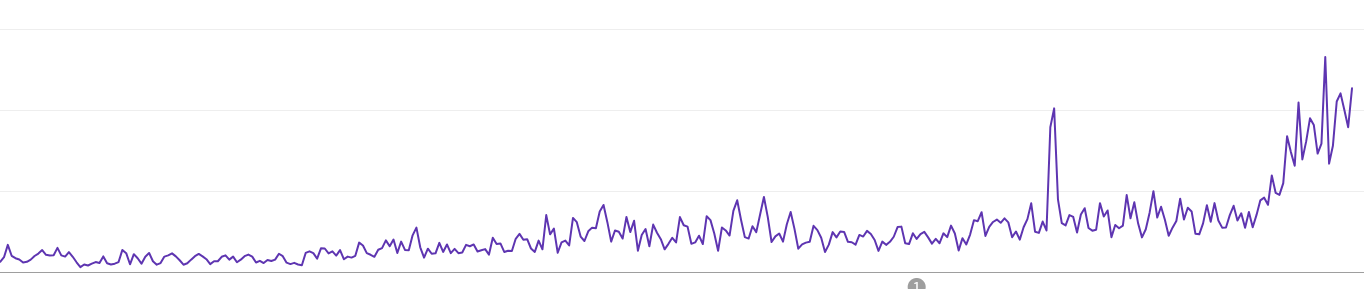
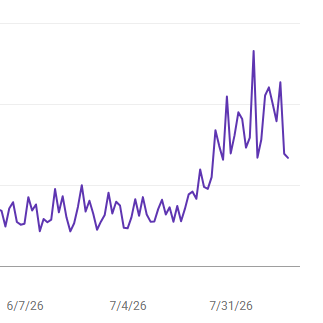
Google Search Console shows how the website appears in Google Search, including impressions, clicks, queries, pages, and average position. These measures help identify opportunities and changes over time. They should be read together rather than using one percentage to tell the entire story of a practice’s marketing performance.
An impression is a search-result appearance, not a website visit. A click is not a consultation, and a consultation is not automatically a completed treatment. Keep these stages separate. When tracking is configured and consent requirements are addressed, connect website actions with the practice’s operational records carefully rather than assuming attribution.
Use a recorded baseline and a consistent comparison period. Seasonality, brand searches, content changes, technical changes, and starting visibility can affect the interpretation. A large percentage increase from a small baseline can still represent a modest number of appearances. Useful reporting shows the underlying numbers alongside the percentage.
Look at priority treatment pages and relevant queries, not only a site-wide total. More visibility for unrelated topics can make a dashboard look stronger without improving the opportunity the practice cares about. We use performance reviews to decide what to improve next, while keeping search visibility distinct from patient revenue.
8. Plan the first 90 days and the work after them
SEO develops over months rather than days. The starting website, competition, local market, implementation speed, and scope affect how progress appears. A new page first needs to be accessible and discovered, and search systems then decide whether and how to show it. Those decisions do not follow an agency’s delivery calendar.
Early work often produces clearer technical and content changes before it produces meaningful search movement. That is why the first reporting period should document completed work, the baseline, and emerging signals. Treat a new page, an indexing request, and an actual increase in qualified visibility as different events.
The first 90 days are a planning window, not a deadline for every page to reach a particular position. Some existing pages may respond to improvements sooner than a new site develops a competitive presence. Avoid using one supplied case or a competitor screenshot to predict the pace for a different practice.
A useful long-term relationship combines accountability for the work with honest interpretation of the results. Ask what will be delivered, how priorities change, and what evidence will be reviewed together. Be cautious when the only explanation is to wait indefinitely, but equally cautious when a fixed ranking date is presented as certain.
Start by agreeing access, the baseline, the important services, and the actual scope. Resolve foundational issues that prevent useful pages from being understood or used. Document what is being changed and why. This creates a reference point for the next review instead of relying on memory or a screenshot taken after the work began.
Develop the content and page improvements in the order that fits the practice. For Essential, that means managing and optimizing the existing site within scope. Signature and Luxe also include dedicated service-page enhancements and revamps. The first month should not be presented as the same list of tasks for every website regardless of its condition.
Our stated 90-day Google Search Console impressions targets are 20% to 30% for Essential, 100% to 150% for Signature, and 200% to 300% or more for Luxe. These are planning targets, not achieved results, forecasts, patient growth, or guarantees. Review them against a recorded baseline and consistent comparison period.
As data develops, refine priorities rather than continuing an initial list unchanged. A page receiving relevant impressions may need a clearer answer or a better search snippet. Another page may still have an access or intent problem. The purpose of the review is to identify the next useful improvement, not to hide uncertainty behind a larger report.
Ongoing SEO should connect the initial strategy with what the site is learning. Review treatment priorities, technical health, relevant queries, new patient questions, and changes in the practice. A service that is no longer offered or a booking process that has changed should not remain on the website simply because the original content plan included it.
Prova Bot is our proprietary service-page monitoring and adaptive SEO system, included only in Signature and Luxe. It monitors service pages 24/7 and makes page changes in response to changes in Google Search and AI-powered search. Its purpose is to keep those pages responsive to the search environment as part of ongoing management.
The system does not replace accurate information from the practice. Clinical details, real services, locations, suitability information, and operational changes still need appropriate input and review. Automation should not become a reason to publish information the clinical team cannot support or to obscure what the agreed SEO scope includes.
Keep reporting understandable enough for the practice to act on. A concise summary of completed work, observed changes, and next priorities can be more useful than pages of disconnected metrics. The team should know which decisions require its input and how the next month relates to the services it wants to grow.
The sequence follows the constraint. Resolve an inaccessible treatment page before commissioning more articles around it. Improve an unclear consultation path before interpreting every inquiry gap as a rankings problem. Review delivered work and observed search changes separately, then choose the next practical priority with the team.
9. Understand costs and monthly scope
Our monthly SEO management plans are Essential at $999, Signature at $1,499, Luxe at $2,499. Each plan also has a $500 one-time setup fee. These are management prices, not advertising budgets, and the current deliverables and comparison remain on our Pricing page.
Essential manages and optimizes the existing site, with foundational SEO, AI search optimizations, Google Business Profile management, and two new blogs per month. Work beyond the existing-site scope is extra. It is intended for single-location practices getting started, not as an implied full redesign or unlimited new service-page project.
Signature includes four new blogs per month, full website optimizations, dedicated service-page enhancements and revamps, Google Business Profile work, AI search optimizations, and high-DR backlink building within the agreed scope. It is positioned for practices at $40k or more in monthly revenue. Revenue eligibility is a plan-fit guideline, not a results claim.
Luxe includes up to ten blogs per month, everything in Signature, and the broader website and AI enhancement scope described in the plan. It is positioned for practices at $80k or more in monthly revenue. Signature and Luxe include Prova Bot. The appropriate plan depends on your current site and priorities, not only on a desired publishing volume.
The current plan comparison is the source for deliverables. Full 90-day impressions targets and measurement qualifications are in the buyer FAQ; they are targets, not historical results.
10. Review evidence and choose the right support
Our supplied captures document top organic appearances and AI Overview citations in Newport Beach and Pasadena. Review the actual queries and result types on Results, rather than treating one capture as an estimate of another clinic’s future patient volume.
Before choosing a provider, ask how it identifies the practice’s highest-priority pages, what it will improve each month, and how it handles medical content review. Clarify who makes changes, which work is included, and how additional projects are agreed. The answers should fit the actual website rather than a generic sales presentation.
Distinguish an SEO management plan from a standalone website design project, an advertising budget, or a promise to fill the calendar. These activities can interact, but they are not interchangeable. Our website design scope is discussed separately when a practice needs more than the page management and enhancements covered by its selected SEO plan.
Use this guide as a reference, not as a reason to add every possible marketing task at once. The next useful action may be resolving an indexing issue, clarifying a treatment page, correcting local business information, or improving the consultation path. A focused sequence is easier to implement and evaluate than an indiscriminate list.
The first step with our team is a free Medspa SEO and AI Visibility Audit. We review your website, priority treatments, and visibility on Google and in AI search, then identify where to focus. From there, our homepage and Services page explain the ongoing work, while Pricing and FAQs help you compare scope before deciding.