
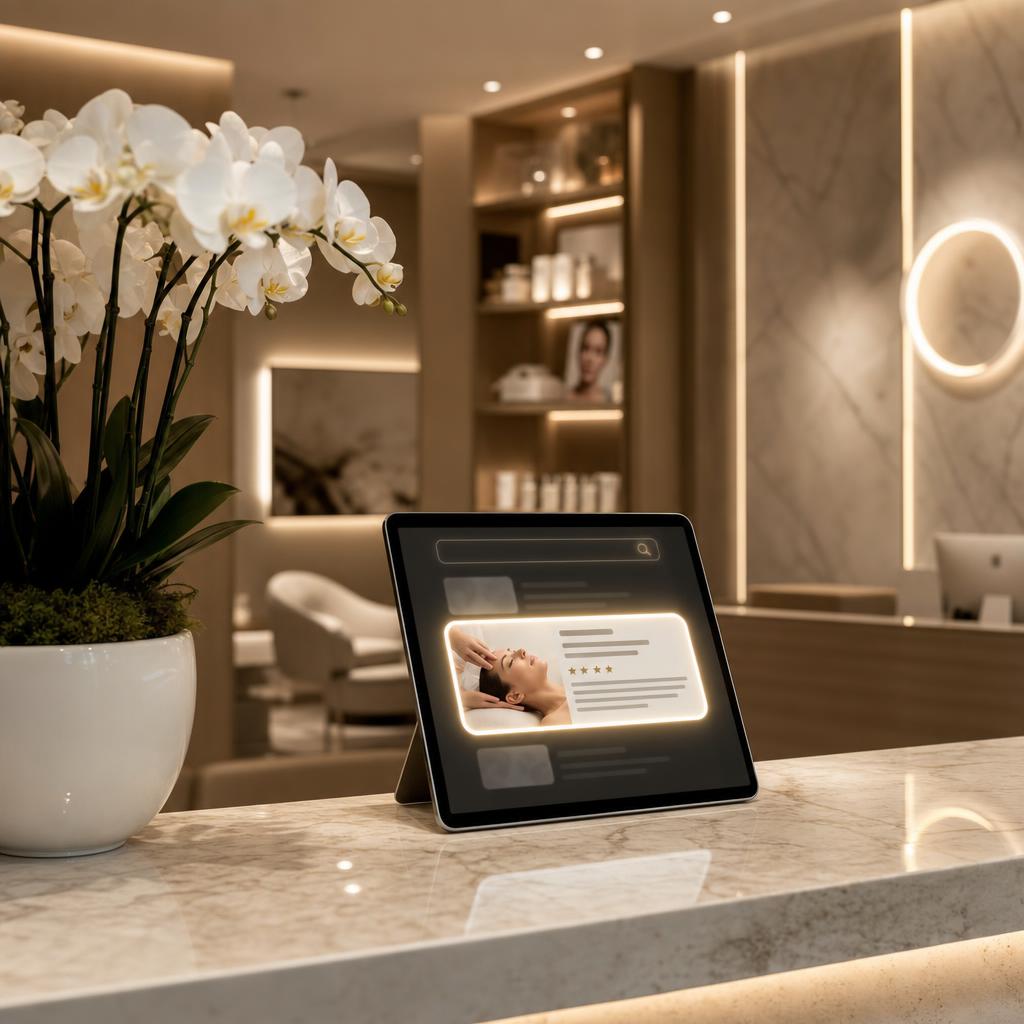
We often hear a version of the same question: should a medspa invest in Google, or has AI changed where patients look? That framing makes a practical problem harder. Google itself contains AI answers, and a patient can compare a generated explanation with a map listing, a practice website, and a review profile before taking action.
The short answer
Patients can discover a medspa through ordinary Google results, maps, or AI answers, then use other sources before booking. We build for that connected journey: accessible treatment pages, accurate local details, clear answers, and a usable consultation path. Channel priorities should follow the practice's evidence, not assumptions about a universal patient behavior.
Start with the decision, not the platform
A patient learning what a procedure involves needs a different answer from someone comparing nearby consultation options. The first question is educational. The second combines local availability, trust, and practical next steps. A single generic homepage rarely resolves both well, however elegant its design may be.
We map the decision before choosing a content format. What does the patient need to understand? Which practice facts matter? What should happen next? This prevents a familiar mistake: publishing more content without deciding whether it helps someone learn, compare, or arrange a consultation.
Our AI visibility work for medspas fits into that broader journey. It is not a replacement website built for robots. The underlying pages still need to help a real person evaluate the practice and find the appropriate appointment path.
Understand the different jobs of Google results and maps
Ordinary results can lead patients to a treatment page, an educational guide, or information about a provider. Maps can help them compare local businesses, opening hours, locations, and reviews. These surfaces overlap, but the information a patient needs from each is not identical.
A useful treatment page explains what is offered and where a consultation takes place. A useful location page resolves which site to visit and how to contact it. A complete business profile should agree with those pages. If the website and profile disagree about availability, the problem is factual consistency, not a missing keyword.
Search results also change with the question and context. We do not assume that the same clinic appears everywhere because one screenshot looks strong. Record the query and result type before drawing conclusions. Otherwise, an organic listing, a map appearance, and an AI citation can become misleadingly interchangeable in a report.
Understand what an AI answer changes
An AI answer can summarize a topic before a patient opens a website. That creates a different reading experience: the patient may encounter a short explanation and selected sources instead of starting with a list of pages. For some local questions, the response may name only one or two practices.
That does not mean every AI answer recommends exactly two medspas, or that every citation is an endorsement. A cited page may support a general explanation without being presented as the preferred clinic. We examine the actual response and supporting link rather than counting any mention as a recommendation.
Google's guidance says that its usual SEO fundamentals remain relevant for AI features. There is no special AI markup requirement. Our article on why some AI answers name very few medspas explains how to interpret that narrower response without treating it as a fixed ranking formula.
Build one useful page for each important treatment decision
Choose a treatment that the practice actually offers and a location it genuinely serves. Write an opening that answers what the service is, where it is available, and what the consultation is for. Follow it with clinically reviewed information and practical details the team can verify.
Do not combine every procedure into one long page simply to mention more keywords. Patients should be able to recognize the relevant service quickly. Equally, avoid producing several thin pages for minor wording variations that lead to the same appointment. Organize by distinct decisions rather than a spreadsheet of near-identical phrases.
Then connect the page to the surrounding website. A service overview should link to the treatment. A relevant article can explain a comparison in depth and link back. The page should not depend on a sitemap alone for discovery, and the patient should not have to return to the homepage to book.
Use this patient-journey worksheet with the team
We use a short worksheet to turn channel discussions into page decisions. Complete one copy for a treatment, using real consultation questions and available search evidence. Where information is missing, assign someone to confirm it rather than filling the gap with persuasive assumptions.
- Patient question: What is the person trying to decide before contacting the practice?
- Answer destination: Which existing page should resolve that decision?
- Verified details: Which location, provider information, and consultation steps can the practice substantiate?
- Supporting route: Which guide or comparison would help without duplicating the destination?
- Next action: Which appropriate consultation or contact step is available?
- Evidence: Which query observations, page metrics, and inquiry records will inform the next review?
A completed worksheet gives writers, operations staff, and developers the same brief. It also reveals when the real obstacle is an unclear service offer or a broken appointment path rather than insufficient content.
Measure discovery separately from consultation intent
Search Console impressions describe appearances within its reporting scope. Clicks describe visits from those results. A website consultation click describes intent to leave for a scheduler. None of those alone establishes that a suitable patient booked, attended, or purchased a treatment plan.
Keep a separate observation log for AI answers: question, date, location context when known, response type, and cited page. Do not turn a few checks into a percentage share of all AI recommendations. The log is a diagnostic sample that helps us inspect whether the right page is being used.
For appointment outcomes, use the practice's booking records and an appropriate attribution process. Protect patient information and avoid sending medical details into analytics tools. When a patient reports using multiple sources, preserve that uncertainty instead of forcing the journey into a single channel label.
Ask the front desk a concrete question during the monthly review: which information did people still need when they contacted the practice? An increase in calls asking whether a service is available at a location may expose a page problem even when traffic looks healthy. Keep the discussion aggregated and avoid copying identifiable patient conversations into marketing reports.
Assign each metric a decision. Impressions can help identify pages worth investigating. Consultation-link clicks can reveal whether visitors find the next step. Confirmed appointments can inform operational planning when measured appropriately. If a metric would not change what the team does next, it should not dominate the report simply because it is easy to collect.
Choose the next improvement from the evidence
If a priority page is not indexed, resolve that before rewriting its headline for AI. If it earns relevant impressions but few visits, review whether the search title describes the answer accurately. If visits arrive but the appointment route is confusing, fix that experience before celebrating discovery.
A practice with clear service pages but inconsistent location information may need local cleanup first. Another may need to replace generic paragraphs with real consultation information. We prioritize the smallest meaningful improvement that addresses the diagnosed obstacle, then record what changed and when.
The 30-minute medspa AI visibility audit checklist provides a practical starting sequence. For the wider foundation, our AI search and GEO foundation guide connects content, accessibility, and credible practice information.
The payoff is a clearer patient journey across search surfaces. We can explain which page serves which decision, which facts support it, and what evidence should guide the next change. That is more useful than choosing a fashionable platform while leaving the website's most important patient questions unanswered.
Keep that plan small enough to execute. One treatment page, one supporting question, and one verified consultation route give the team a manageable starting unit. Expand after the workflow is reliable, not because a new search interface creates pressure to rebuild everything at once.