
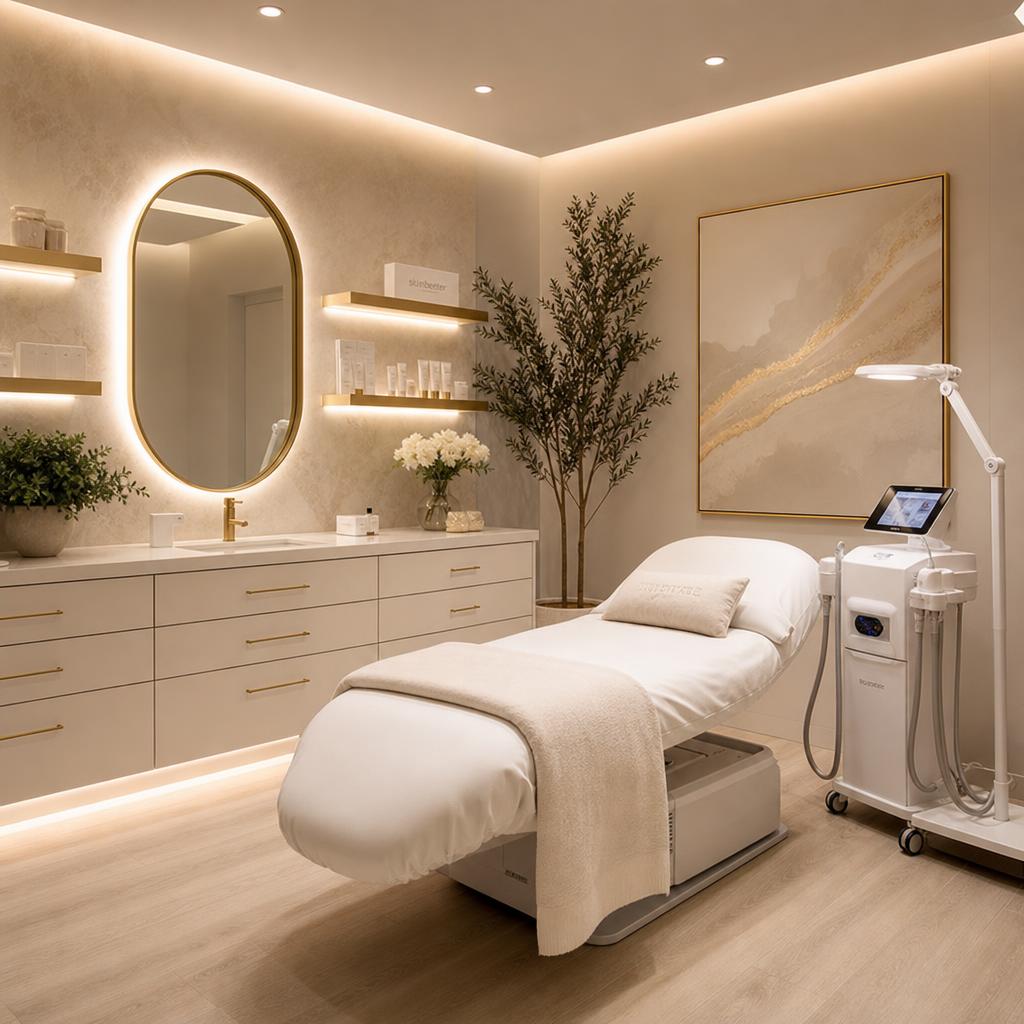
Service pages and location pages answer different patient questions. We use service pages to explain a treatment and location pages to clarify where care is available. The right structure follows genuine differences in the practice, not a plan to create a thin page for every city phrase.
This article explains the distinct purpose of each page type, when to build each one, how to make location pages genuinely valuable rather than doorway pages, and how to link these pages together for maximum local relevance.
For the broader local SEO strategy this architecture supports, see the Local SEO for Medspas: The Definitive 2026 Playbook.
The Two Page Types and What They Actually Do
Service Pages: Treatment-Level Relevance
A service page answers a treatment-specific question: What is this procedure? Who is a good candidate? What does the process involve? What are realistic outcomes? What does it cost at your clinic? These pages target the research queries patients use when they're evaluating a treatment, often before they've decided on a clinic.
Search queries a service page can rank for:
- "How does Morpheus8 work"
- "CoolSculpting vs. Emsculpt"
- "How long does laser hair removal take [city]"
- "Botox cost [city]"
- "Is Sofwave worth it"
Each of these is a distinct searcher with a distinct question at a distinct stage of their decision process. A single consolidated "Services" page cannot rank for all of them, individual pages can.
Location Pages: Geographic Anchoring
A location page answers a different set of questions: Where is this clinic? What neighborhood does it serve? Who are the practitioners at this specific location? What makes this location right for me? It anchors your clinic to a specific geography in Google's local index and gives local-intent searches a precise destination.
Search queries a location page can rank for:
- "Medspa [city]"
- "Best medspa [neighborhood]"
- "Botox clinic [city]"
- "Medical spa near [landmark]"
These are typically higher-intent queries from patients who know what they want and are choosing where to get it.
When to Build Each Page Type
Build a Service Page When:
- A treatment generates enough patient search volume to justify a dedicated destination (most core treatments do)
- The treatment has a distinct research journey, patients need to understand it before booking
- The treatment has enough differentiation in your clinic's approach to justify unique content (your specific protocol, devices used, injector credentials)
- The treatment competes with alternatives that patients are actively comparing
Build a Location Page When:
- Your clinic has a physical address that patients visit
- You have multiple physical locations
- You want to rank for geo-modified searches beyond your immediate map-pack radius
- You can create genuinely unique content for a specific neighborhood or service area
Do Not Build a Location Page When:
- You don't have a physical presence in the target area
- The page would be identical to another location page with only the city name changed
- You don't have enough unique content to differentiate the page from a template
The doorway page trap
Creating ten location pages for surrounding zip codes, with identical content and a swapped city name, is a doorway pattern. Google's quality guidelines explicitly target these pages. A pattern of doorway pages can suppress your entire site's performance, not just the thin pages themselves. Build fewer, better location pages.
What Makes a Location Page Genuinely Valuable
A location page that isn't a doorway page has substantive, unique content that would only make sense for that specific location. Here's what differentiates a real location page from a template:
Elements of a Genuine Location Page
- Location-specific staff profiles: The practitioners at this location, with their credentials and specialties. Not a generic "our team" section that applies to every location.
- Real photos of this specific clinic: Interior, waiting area, treatment rooms, and staff at this address. Stock photography or photos from a different location defeats the purpose.
- Local context: Neighborhood description, what the area is known for, how your clinic serves the specific patient population of this area. A medspa in a resort community has different seasonal patterns and patient priorities than one in a downtown business district, say so.
- Practical local information: Parking specifics, transit options, nearby landmarks, hours if they differ from other locations, parking validation if offered.
- Location-specific reviews or testimonials: Patient feedback specifically referencing this location gives Google and prospective patients location-anchored social proof.
- Services available at this location: If this location offers a different treatment mix than others, make that explicit. Even if the services are identical, linking to the relevant service pages from this location page creates the relational structure Google needs to understand your clinic's geographic service model.
Architecture for Single-Location Medspas
A single physical location doesn't need a complex location hierarchy. What it needs:
- One well-built primary location page (often the homepage or an integrated About/Location page) that clearly establishes the address, neighborhood, and service area
- Individual service pages for each core treatment
- Optionally: neighborhood-level pages for the one or two nearest high-population areas with genuine search volume, if you can create substantive unique content for each
The single-location mistake to avoid is collapsing everything into the homepage. Your homepage should establish brand positioning and route patients to the right destination, it should not try to rank for every service and location simultaneously.
Architecture for Multi-Location Medspas
Multi-location architecture requires deliberate planning to avoid both internal competition and doorway-page patterns.
Recommended URL Structure
/locations/                    ← Location index page
/locations/[city-name]/        ← Individual location page
/treatments/                   ← Service index page
/treatments/[treatment-name]/  ← Individual service page
This structure signals clear hierarchy to Google and keeps location-specific and treatment-specific content separate, preventing the two from competing with each other for the same queries.
Location Index Page
The location index page (/locations/) should list all physical locations with brief descriptions, serve as a navigational hub, and not try to rank for specific local treatment keywords, that's the job of the individual location pages beneath it.
Cross-Linking Between Services and Locations
Implement bidirectional linking deliberately:
- Each location page links to the service pages for treatments available at that location (e.g., "Available at our Austin location: Botox, Morpheus8, Laser Hair Removal")
- Each service page references the locations where the treatment is available ("Offered at our [City A] and [City B] locations")
- Where a treatment is only available at specific locations, that scarcity itself is valuable content, make it explicit
Service Page Anatomy for Local Relevance
A service page built for local SEO has everything a national treatment page has, plus intentional local signals:
- Title tag and H1 that include the treatment name and city naturally: "Botox Injections in Austin, TX | [Clinic Name]"
- Opening paragraph that contextualizes the treatment for your specific patient population, local climate, lifestyle, or aesthetic preferences where genuinely relevant
- Practitioner credentials for the injector or provider performing this treatment at your clinic (local trust signal)
- Clinic-specific differentiators, your protocol, the specific FDA-approved product or device used, what makes your approach to this treatment distinctive
- Local schema markup, MedicalClinic or MedicalBusiness structured data that connects the service to your location
- Clear call to action that routes to your booking system for this specific treatment
Related Reading
Avoiding Internal Keyword Cannibalization
Cannibalization occurs when two or more pages on your site target the same primary keyword and compete against each other in search results. In a medspa context, the most common versions are:
- A service page and a location page both targeting "Botox [city]" without clear differentiation
- Multiple location pages for nearby cities targeting the same treatment queries
- A blog post and a service page targeting the same treatment keyword
The solution is clear intent differentiation. Your service page for Botox owns the treatment research queries. Your location page owns the "medspa near me" and "medspa [city]" queries. A supporting blog post on Botox would target a narrower question, "how long does Botox last" or "Botox vs. Dysport", not the same head term as the service page.
If you're building this architecture for the first time or auditing an existing site, identify cannibalization issues and map pages to distinct search intent before producing more content. Discuss those priorities when scoping SEO management.
We make those distinctions clear for patients and for the pages search and AI systems can access. Our medspa website design approach connects service information with real locations and a usable consultation path.